Tampilkan postingan dengan label SMA X Semester 2. Tampilkan semua postingan

Minggu, 26 Februari 2012

VOCABULARY AROUND THE HOUSE


Definition of house :

as Nouns
  • a dwelling that serves as living quarters for one or more families.
  • the members of a business organization that owns or operates one or more establishments.
  • the members of a religious community living together.
  • the audience gathered together in a theatre or cinema
  • an official assembly having legislative powers
  • aristocratic family line
  • play in which children take the roles of father or mother or children and pretend to interact like adults.
          (astrology) one of 12 equal areas into which the zodiac is divided.

  • the management of a gambling house or casino.
  • a social unit living together.
  • a building where theatrical performances or motion-picture shows can be presented.
  • a building in which something is sheltered or located.

as Verbs

  • contain or cover.
  • provide housing for.

Sabtu, 25 Februari 2012

SURPRISES and DISBELIEFS

Surprise or disbeliefs is : 
  1. a feeling that we feel when we heard an amazing news which surprised and amazed us 
  2. an expression that we show/say when we know/hear/see something that rather difficult to believe 
  3. used to express something that we can’t or impossible.


PREPOSITION IN, ON, AND AT


The prepositions in, on, and at can be used to indicate time and place. Notice how they are used in the following situations:


PASSIVE VOICE


Use of Passive
Passive voice is used when the focus is on the action. It is not important or not known, however, who or what is performing the action.
Example: My bike was stolen.

In the example above, the focus is on the fact that my bike was stolen. I do not know, however, who did it.


Sometimes a statement in passive is more polite than active voice, as the following example shows:
Example: A mistake was made.


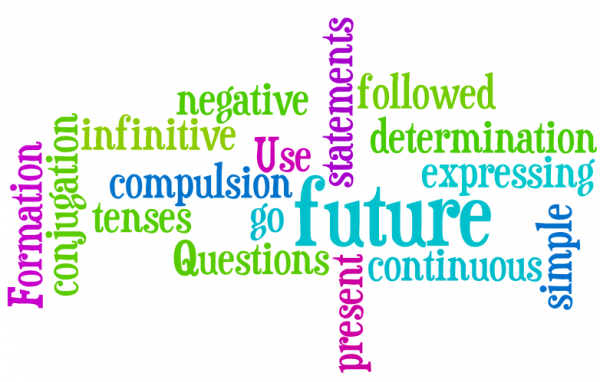
SIMPLE FUTURE

The simple future tense is often called will, because we make the simple future tense with the modal auxiliary will.


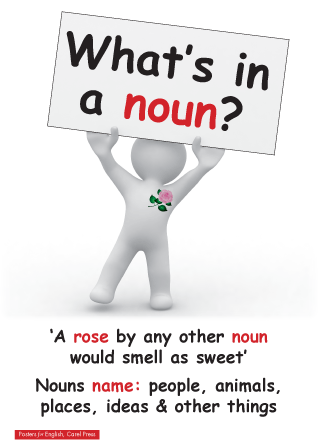
NOUN PHRASES

Noun is a word that names a person, animal, place, thing, idea, or concept, or anything considered as noun
The Noun examples
Persons: girl, boy, instructor, student, Mr. Smith, Peter, president
Animals: dog, cat, shark, hamster, fish, bear, flea
Places: gym, store, school, Lake Minnetonka, Minnesota, village, Europe
Things: computer, pen, notebook, mailbox, bush, tree, cornflakes
Ideas: liberty, panic, attention, knowledge, compassion, worship


OFFERING

Definition of Offering :
1. The act of making an offer.
2. Something, such as stock, that is offered.
3. A presentation made to a deity as an act of religious worship or sacrifice; an oblation.
4. A contribution or gift, especially one made at a religious service.


NEWS ITEM


News Item: is a factual text which informs the readers about events of the day which are considered newsworthy or important.
Social function of news item is: to inform readers, listeners or viewers about events of the day which are considered newsworthy or important
.


NARRATIVE TEXT 2


Narrative text is a kind of text that has function to entertain, create, stimulate emotions, motivate, guide, and teach the reader which contains about story (fiction/non fiction/tales/folktales/ fables/myths/epic) and in its plot consists of climax of the story (complication) then followed by the resolution.


INVITATION (written)

Most spore invitation are in the farm of question they often begin with will,would,would you like to,would you care to,etc


MODALS IN THE PAST FORM


Modals in the past are :

1) Could.
Could is used to express possibility or past ability as well as to make suggestions and requests. "Could" is also commonly used in conditional sentences as the conditional form of "can."

INTRODUCTORY IT

When the subject is an infinitive phrase, the sentence often begins with it. Instead of saying ‘To find fault with others is easy’, we say, ‘It is easy to find fault with others’. More examples are given below.
  • It is easy to learn English. (More natural than ‘To learn English is easy’.) 
  • It was not easy to understand his motive. 
  • It may be advisable to consult a specialist.
  • It could be dangerous to drive so fast.
  • It was pleasant to sit on the beach.

GRATITUDE, COMPLIMENT, AND CONGRATULATION


1.GRATITUDE
Gratitude is an expression that we show or say to express grateful feeling to other people. When speaking English, you say “thanks” very often. Please say “thank you” when people give you something, help you do something, wish you something and give you a compliment etc.


DIRECT & INDIRECT SPEECH


Direct speech : refers to reproducing another persons excact word. We use quotation marks.
Example of Direct Speech :
1. Jani said, “I’m very busy .”
2. They said, “We have bought a picture.”
3. He said, “I am learning my lesson.”
4. Lisa says, “I got the first prize.”
5. You said, “I will come to help him.”
6. Oskar will say, “I will do my best.”

ASKING IF SOMEONE REMEMBERS OR NOT

Formal expressions:
  • I wonder if you remember..... 
  • You remember...., don’t you?
  • You haven’t forgotten...., have you?
  • Don’t you remember.....?
  • Do you happen to remember it now?

DESCRIPTIVE TEXT

The Definition and Purpose of Descriptive Text
Descriptive text is a text which say what a person or a thing is like. Its purpose is to describe and reveal a particular person, place, or thing.


Asking For Information

Definition :
Asking for information is one way of communicating the purpose of obtaining or asking for information person unknown.